You have 0 items in your cart
Top skincare advice – What is the difference between Skin Purging Vs Skin Reaction..?
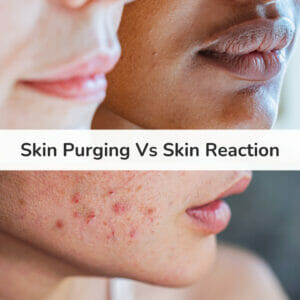
With all skincare advice, it is known that anyone can get a skin reaction, you don’t have to feel that your skin is the ‘sensitive’ type to experience a skin reaction. This can happen when you introduce a new ingredient to your skin like a new cosmetic, make-up product, beauty tinting product, eyelash glue, body moisturiser, sunscreen, or a skincare product. A skin reaction is determined by; a breakout of spots, an itchy rash, dry/flaking skin, red bumps, and or blotchy skin. When this happens it’s common to think that your skin is ‘allergic’ to the product you’ve used, but it could simply be the response caused by certain ingredients contained within the product that the skin is having an adverse reaction too.
What is a skin reaction?
A skin reaction is more likely to be an allergic response when the skin comes into contact with a particular ingredient. In this instance, the immune system will react in a way that causes irritation to the skin. Whilst a skin reaction may not be detrimental to your overall health, it’s usually uncomfortable as the skin is likely to be sore and itchy. When a skin reaction occurs we would advise you to stop using the product that caused it as continued exposure can prolong or worsen the symptoms.
How long will a skin reaction last?
A skin reaction can last as little as a few hours, or as long as 2-4 weeks, depending on your individual response. As well as removing the substance from the skin and stopping use, some treatments can help to ease the symptoms more rapidly, including antihistamine, emollient, anti-itch cream or a cool/wet compress.
What is skin purging?
Depending on the type of product, and its targeted use, the skin may be encouraged to speed up the cell renewal process. This in turn can lead to blockages in the pores as dead skin and oil build up on the surface resulting in the formation of spots and blotchy skin. We call this action skin purging, and it’s a common response when cell renewal is accelerated. How it differs from a ‘skin reaction’ is that the symptoms are not usually uncomfortable as the skin isn’t ‘irritated’. Skin purging is also limited to the use of new skincare products, whereas a skin reaction can occur in response to other products, including soaps, detergents, cleaning products, and hair products.
Skin purging can also be expected following a deep cleansing in-clinic treatment that speeds up a cellular turnover or uses active ingredients, such as microneedling, chemical peels, and laser skin resurfacing treatments.
How long will skin purging last?
You’ll need to allow at least 28 days for skin purging symptoms to ease as this is the typical duration of the ‘skin cycle’ – when the deeper skin cells move to the surface of the skin and expel. You may need to allow up to 6 weeks for the skin to return to its normal state, and for improvements to its quality and condition to become visible. If spots, dryness, flaking and blotchy patches have not cleared within this time, you should consider tweaking your routine or contacting the skin care professional for my advice.
What ingredients are likely to cause skin purging?
Products and skin treatments that are likely to cause skin purging include those that speed up exfoliation and cell turnover, as well as boosting collagen and reducing dark spots, and hyperpigmentation. These products often contain AHAs (Alpha-Hydroxy Acids), BHAs (Beta-Hydroxy Acids), Vitamin A/Retinoids, Benzoyl Peroxide, Vitamin C, fruit and enzyme exfoliants, and Azelaic acid. Medical and pharmaceutical grade skincare will often contain these ingredients in a higher concentration as they are recommended under the supervision of a trained skincare professional.
What is the best skincare advice and how do I treat my skin when it’s purging?
Skin purging can be part of the normal response process of the skin adjusting to active ingredients within the product. We wouldn’t usually advise you to stop using the products that have caused it, it’s best to continue with the routine and allow the skin to detox and adjust to the active skincare. It is advised to speak with a skincare professional for advice on what products are best suited for your skin and can explain how best to use them, as well as having a point of contact for further advice and support if you have any concerns about how your skin is responding to skincare you have purchased.
A skincare professional will be trained to give recommendations and advice on the best skincare products that are safe for you to use and give aftercare advice that may take skin purging into account. It may benefit your skin to use the products less frequently until the symptoms have passed and the skin’s condition has returned to normal. Alternatively, products that contain peptides, ceramides, and hyaluronic acid can soothe the skin and help to repair its natural protective barrier.
Hope this is helped to explain the differences between an adverse skin reaction and skin purging as part of the expected response process to active skincare.
Skincare Advice
If you are considering changing or taking on a new skincare routine and want to speak to a skincare expert please contact us via our online consultation